
Making Drone UX Trustworthy
Operator confidence is restored in drones & the dock's autonomous system
Product Design
Physical AI
Highlights
A global drone fleet platform redesigned around the decisions operators make when nobody else is standing beside them.
Context
Autonomy trust does not fail only in the algorithm. It also fails in the interface. This global drone fleet platform was technically capable, but the people running missions still had to translate engineering telemetry before they could act.
The software had been built by engineers who understood every layer of it. It was then handed to operators who were never supposed to need that same technical depth.

Highlights
Crafting the future of drone autonomy with my team of three designers.
Challenge
Engineers built the interface for engineers, and operators inherited it without needing any of that expertise.
Solution
I with my team restructured every screen around the operator's core questions. What is happening? Is anything wrong? What do I need to do?
Outcome
Coordinators could read their own dashboard without keeping an engineer on standby.


Where It Started
The dashboard knew everything except what the operator needed next.
The interface had grown one engineering field at a time until telemetry and urgent exceptions carried the same visual weight. Overnight operators needed perimeter state, patrol status, and clear reasons for unavailable equipment. The gap between what the system displayed and what the job required became the brief.
The Operator System
Every screen began with the next decision.
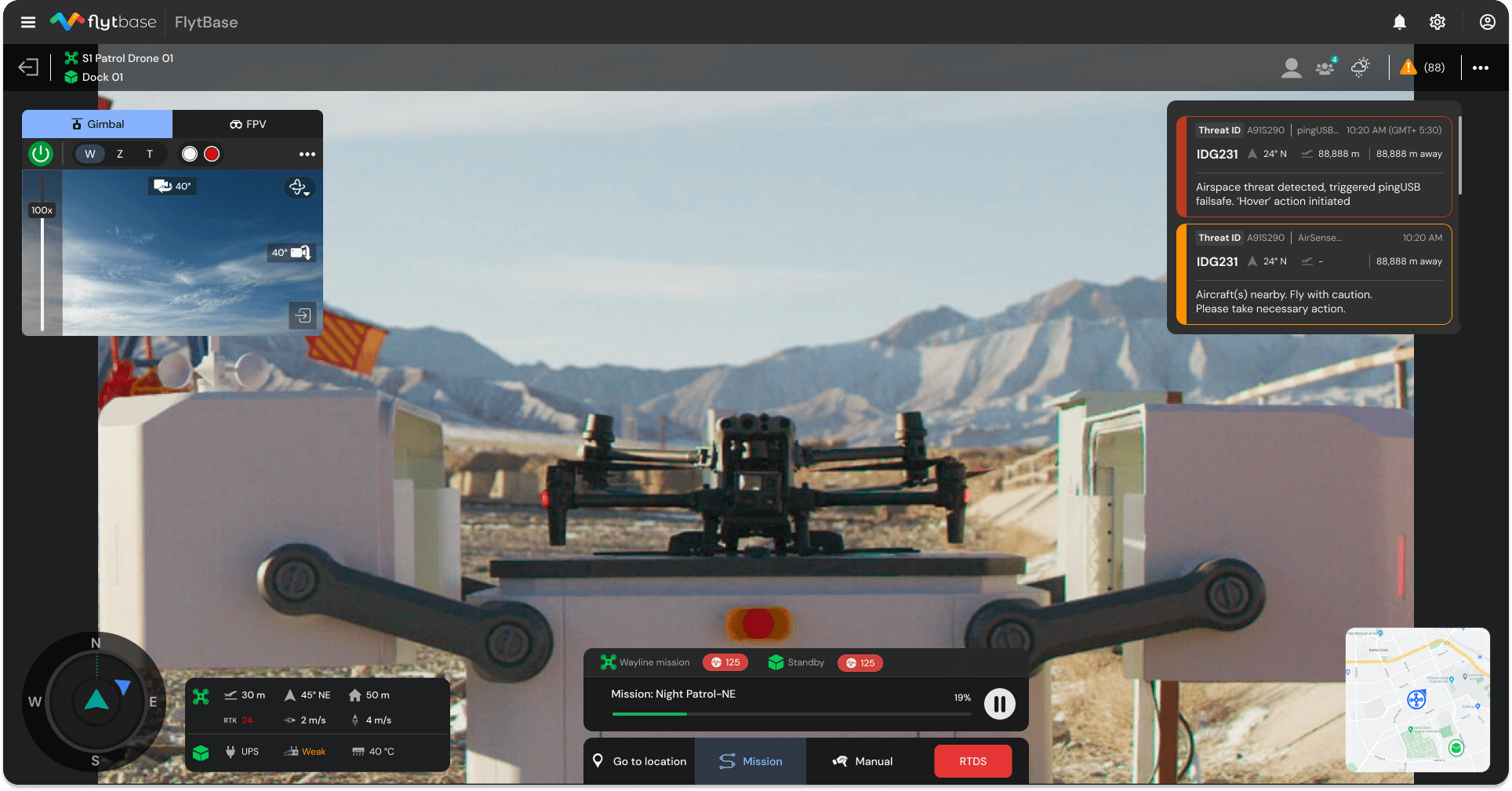
I reorganized the product around situational awareness rather than information density. Alerts gained graduated severity, logs became accountability records, and mission programming began with operator intent. Telemetry remained available without competing with the state, exception, and action that mattered first.

Judgment Log
Trust had to be rebuilt in the hierarchy, not added as reassurance.
The most important call was removing equal visual weight from equally available data. Showing everything at once transferred interpretation to the operator. Severity became a decision language, logs supported accountability, and intent became the starting point for mission creation.

Outcome & Closing
Operators could act without translating the machine first.
The workflow moved from engineering-dependent to operator-led. Coordinators could read the mission state, identify what needed attention, and act without waiting for translation. Today, agentic tooling could compress the mapping work while leaving final product judgment human.
More Works
©2026

FAQ
01
What kind of problem is worth bringing to you?
02
Do you work as a designer, founder, or advisor?
03
What do you need before a first conversation?
Making Drone UX Trustworthy
Operator confidence is restored in drones & the dock's autonomous system
Product Design
Physical AI
Highlights
A global drone fleet platform redesigned around the decisions operators make when nobody else is standing beside them.
Context
Autonomy trust does not fail only in the algorithm. It also fails in the interface. This global drone fleet platform was technically capable, but the people running missions still had to translate engineering telemetry before they could act.
The software had been built by engineers who understood every layer of it. It was then handed to operators who were never supposed to need that same technical depth.
Highlights
Crafting the future of drone autonomy with my team of three designers.
Challenge
Engineers built the interface for engineers, and operators inherited it without needing any of that expertise.
Solution
I with my team restructured every screen around the operator's core questions. What is happening? Is anything wrong? What do I need to do?
Outcome
Coordinators could read their own dashboard without keeping an engineer on standby.
Where It Started
The dashboard knew everything except what the operator needed next.
The interface had grown one engineering field at a time until telemetry and urgent exceptions carried the same visual weight. Overnight operators needed perimeter state, patrol status, and clear reasons for unavailable equipment. The gap between what the system displayed and what the job required became the brief.
The Operator System
Every screen began with the next decision.
I reorganized the product around situational awareness rather than information density. Alerts gained graduated severity, logs became accountability records, and mission programming began with operator intent. Telemetry remained available without competing with the state, exception, and action that mattered first.
Judgment Log
Trust had to be rebuilt in the hierarchy, not added as reassurance.
The most important call was removing equal visual weight from equally available data. Showing everything at once transferred interpretation to the operator. Severity became a decision language, logs supported accountability, and intent became the starting point for mission creation.
Outcome & Closing
Operators could act without translating the machine first.
The workflow moved from engineering-dependent to operator-led. Coordinators could read the mission state, identify what needed attention, and act without waiting for translation. Today, agentic tooling could compress the mapping work while leaving final product judgment human.
More Works
©2026
FAQ
01
What kind of problem is worth bringing to you?
02
Do you work as a designer, founder, or advisor?
03
What do you need before a first conversation?
Making Drone UX Trustworthy
Operator confidence is restored in drones & the dock's autonomous system
Product Design
Physical AI
Highlights
A global drone fleet platform redesigned around the decisions operators make when nobody else is standing beside them.
Context
Autonomy trust does not fail only in the algorithm. It also fails in the interface. This global drone fleet platform was technically capable, but the people running missions still had to translate engineering telemetry before they could act.
The software had been built by engineers who understood every layer of it. It was then handed to operators who were never supposed to need that same technical depth.
Highlights
Crafting the future of drone autonomy with my team of three designers.
Challenge
Engineers built the interface for engineers, and operators inherited it without needing any of that expertise.
Solution
I with my team restructured every screen around the operator's core questions. What is happening? Is anything wrong? What do I need to do?
Outcome
Coordinators could read their own dashboard without keeping an engineer on standby.
Where It Started
The dashboard knew everything except what the operator needed next.
The interface had grown one engineering field at a time until telemetry and urgent exceptions carried the same visual weight. Overnight operators needed perimeter state, patrol status, and clear reasons for unavailable equipment. The gap between what the system displayed and what the job required became the brief.
The Operator System
Every screen began with the next decision.
I reorganized the product around situational awareness rather than information density. Alerts gained graduated severity, logs became accountability records, and mission programming began with operator intent. Telemetry remained available without competing with the state, exception, and action that mattered first.
Judgment Log
Trust had to be rebuilt in the hierarchy, not added as reassurance.
The most important call was removing equal visual weight from equally available data. Showing everything at once transferred interpretation to the operator. Severity became a decision language, logs supported accountability, and intent became the starting point for mission creation.
Outcome & Closing
Operators could act without translating the machine first.
The workflow moved from engineering-dependent to operator-led. Coordinators could read the mission state, identify what needed attention, and act without waiting for translation. Today, agentic tooling could compress the mapping work while leaving final product judgment human.
More Works
©2026
FAQ
What kind of problem is worth bringing to you?
Do you work as a designer, founder, or advisor?
What do you need before a first conversation?